

Electric Cars For Sale
Electric Cars For Sale
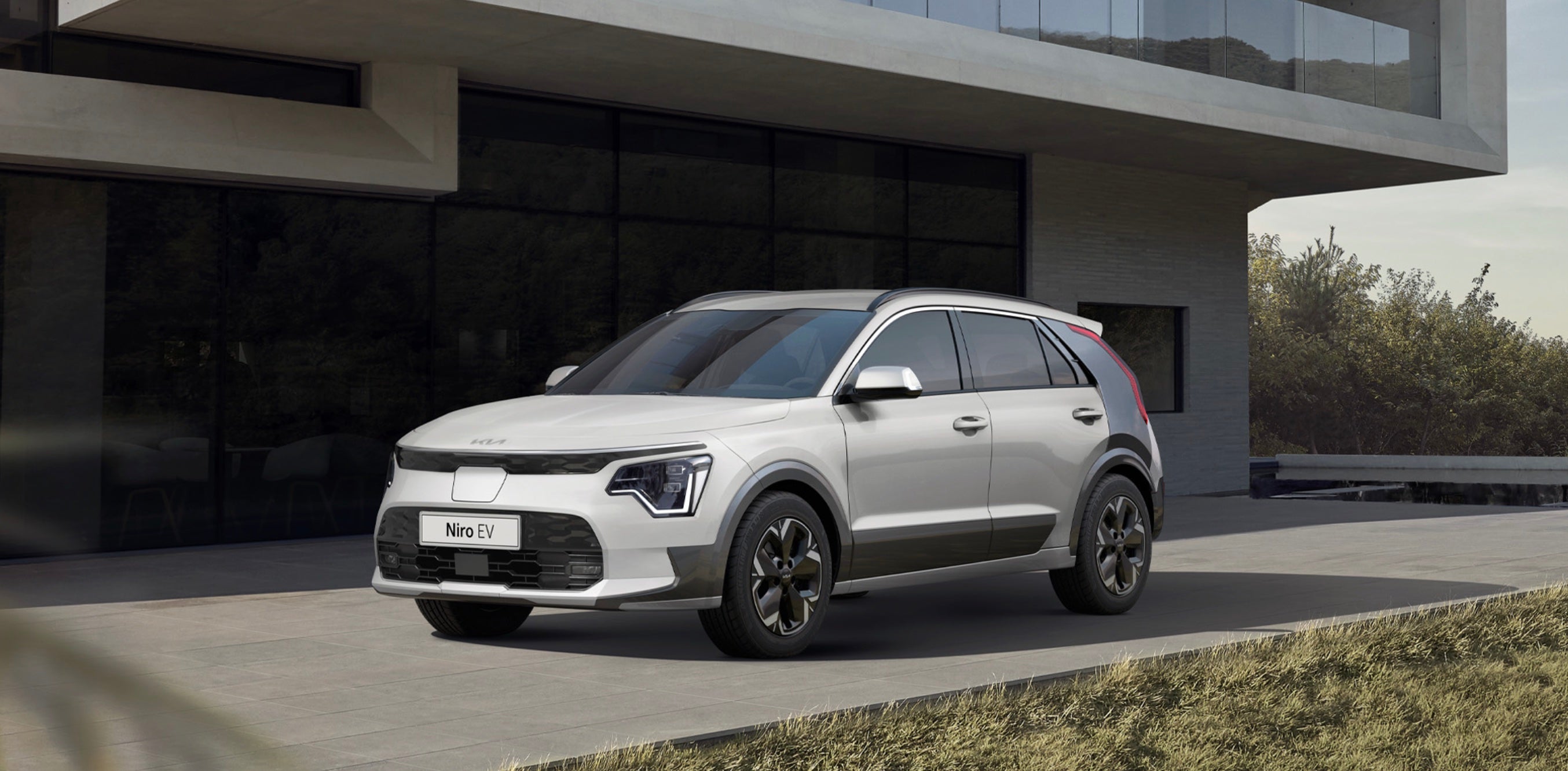
Experience the future of driving at Ewald Kia! Our selection of cutting-edge electric cars for sale offers exceptional performance, impressive efficiency, and advanced technology. When you choose to buy an electric car or Kia electric SUV from us, you're not only making a commitment to sustainable, zero-emission driving, you're also stepping into a world of incredible driving dynamics, lower maintenance costs, and exciting new features. We're here to guide you every step of the way, with our knowledgeable team ready to answer all your questions about Kia electric car ownership. Come join the electric revolution at Ewald and discover the joy of the open road in an entirely new way at our Kia dealer near you!
Frequently asked questions about electric cars for sale
Are electric cars safe?
Yes, electric cars are safe. They undergo the same rigorous safety testing and meet the same safety standards required for conventional cars.
Crash Safety: Electric cars for sale are designed with crash safety in mind just like conventional cars. Many Kia electric cars have received high ratings in crash tests conducted by safety organizations like the National Highway Traffic Safety Administration (NHTSA) and the Insurance Institute for Highway Safety (IIHS). The lower center of gravity due to battery placement often improves stability, reducing the risk of rollover accidents.
Battery Safety: The batteries used in electric cars are designed to withstand impacts without rupturing or catching fire. In the event of an accident, systems are in place to disconnect the battery, reducing the risk of an electrical fire. While there have been isolated incidents of battery fires, they're statistically less common than fires in gasoline cars.
Electric Shock Protection: Electric vehicles have numerous safety measures to protect occupants and emergency responders from electric shocks. The body of the Kia electric SUV is isolated from the high-voltage system to prevent electric shock, and in case of an accident, safety systems are designed to instantly cut off the battery's connection to the rest of the vehicle.
Pedestrian Safety: Because electric cars are very quiet, especially at low speeds, they can potentially pose a risk to pedestrians and cyclists who might not hear them coming. To address this issue, many countries have regulations requiring electric vehicles to emit artificial noise at low speeds to alert pedestrians of their presence.
Post-Crash Safety: Emergency responders are trained in how to safely handle electric vehicles after a crash. The high-voltage system is clearly marked and can be disconnected to ensure the safety of those at the scene.
So, while electric cars come with their own unique set of safety considerations, they are built to be just as safe as conventional vehicles, if not safer in some respects. As with any car for sale in Waukesha, proper maintenance and careful driving are essential to ensure safety.
Are electric cars faster than gasoline cars?
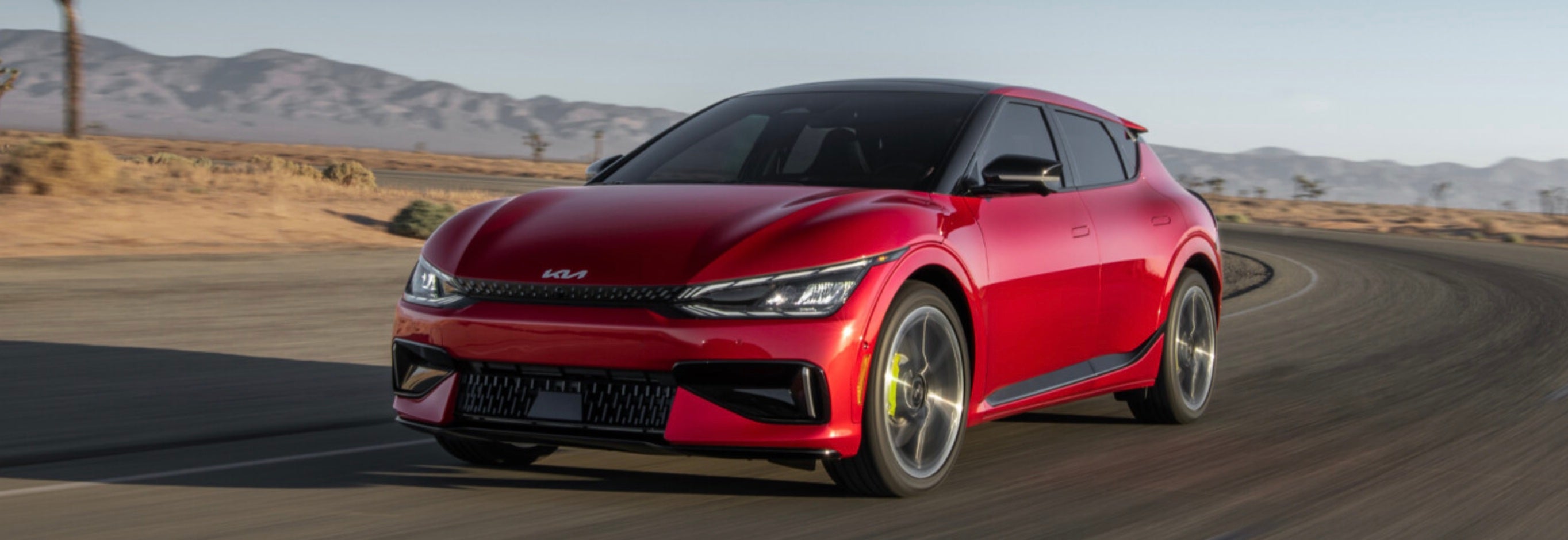
Electric cars, like the Kia EV6, can often accelerate more quickly than many gasoline cars due to the immediate torque delivery of electric motors. This leads to very rapid acceleration from a standstill, a characteristic that can make electric cars feel very fast. Several electric cars for sale even have acceleration times from 0 to 60 mph in around 3 seconds or even less, which is faster than many sports cars.
However, the top speed of electric cars can sometimes be lower than high-performance gasoline cars. This is due in part to the way electric motors work and how they are geared. Electric vehicles also have to balance speed and acceleration against their range. Higher speeds use more battery power, reducing the distance the car can travel between charges.
In terms of acceleration, many electric cars outperform their gasoline counterparts. In terms of top speed, some high-performance gasoline cars may be faster, although the top speeds of most vehicles, whether electric or gasoline, are far above legal speed limits.
Don’t forget that speed is just one aspect of performance! Electric cars also have other benefits, like lower center of gravity for better handling, smoother acceleration, quieter operation, and, of course, zero tailpipe emissions. Visit our Kia dealer near you today to experience the difference for yourself!
How does regenerative braking work?
Regenerative braking is a feature found in electric cars for sale and hybrids that captures and converts the kinetic energy produced by braking into electrical energy, which is then stored in the vehicle's battery for later use. This process increases overall energy efficiency and extends the vehicle's driving range.
Here's a simplified explanation of how it works:
Vehicle in Motion: When the vehicle is moving, the electric motor is using power from the battery to turn the wheels and propel the car forward.
Driver Brakes: When the driver applies the brakes, the electric motor switches roles and acts as a generator.
Energy Conversion: As the vehicle slows down, the wheels start turning the motor instead of the other way around. This motion generates electricity, effectively turning the motor into a generator. The resistance created by this process helps slow the vehicle down.
Energy Storage: The electricity generated by the motor is converted to a suitable form and sent back to the battery, where it's stored for later use.
Energy Reuse: The stored energy can then be used to power the motor again when the Kia EV is next driven.
Regenerative braking is a great way to improve the efficiency of electric vehicles, like the Kia EV6. It not only extends the driving range but also reduces wear on the conventional braking system, which could lower maintenance costs for your Kia Niro EV over time.
People also ask the following questions about electric cars for sale
What's the difference between a hybrid and an electric car?
Kia electric cars for sale and hybrid vehicles are both more environmentally friendly alternatives to conventional gasoline or diesel cars, but they function differently:
Electric Vehicles (EVs):
Electric vehicles, also known as battery electric vehicles (BEVs), are fully electric, meaning they are solely powered by electricity. They have a battery that stores electricity to power an electric motor, which then drives the wheels. They do not have an internal combustion engine and do not consume gasoline or produce tailpipe emissions. Kia EVs are charged by plugging them into an external power source.
Hybrid Vehicles:
Hybrid vehicles, on the other hand, combine a traditional internal combustion engine with an electric propulsion system. This design aims to achieve better fuel efficiency than a purely gasoline-powered Kia in Waukesha, and it also reduces emissions.
There are several types of hybrid vehicles:
Parallel Hybrids: These are the most common type of hybrid, and they can use either the engine, the electric motor, or both to power the vehicle. The electric motor is used at low speeds, and the gasoline engine takes over at higher speeds. The battery is charged through regenerative braking.
Series Hybrids: In these vehicles, the gasoline engine doesn't directly power the vehicle. Instead, it works as a generator to produce electricity for the electric motor, which drives the wheels.
Plug-In Hybrids (PHEVs): These hybrids have larger batteries and can be plugged into an external power source to charge, much like an electric car. They can operate on electric power alone for short distances, and then the gasoline engine kicks in for longer journeys or when the battery depletes.
While EVs offer the advantage of producing no tailpipe emissions and generally have lower operating costs, hybrid vehicles provide a good compromise for those not ready to go fully electric, as they offer increased fuel efficiency and reduced emissions compared to conventional cars without range anxiety. Our car dealer in Waukesha offers both EV and hybrid options. The team at Ewald Kia will help you determine which type of powertrain is most suitable for your needs.
Can electric cars tow or carry heavy loads?
Yes, our electric cars for sale in Waukesha can indeed tow and carry heavy loads, but there are some considerations to keep in mind.
Electric cars for sale generally have strong torque, which is the force that helps pull loads, from the moment the motor starts running. This can make them effective at towing. Some electric vehicles, like the Tesla Model X or the Rivian R1T, are rated to tow significant weight — comparable to many conventional SUVs and trucks.
However, towing and carrying heavy loads can significantly decrease the range of an electric vehicle, which is the distance it can travel before it needs to be recharged. The added weight requires more power to move, and this can deplete the battery more quickly. This is also true for gasoline-powered vehicles, where towing heavy loads will decrease fuel efficiency.
If you're planning on regularly towing heavy loads, it would be best to choose an electric vehicle designed with this in mind. Check the official towing capacity of the Kia in Waukesha, which should be listed in the vehicle's specifications. While EVs can tow, their range will be affected, and this could be an important factor depending on the availability of charging stations on your route.
Do electric cars have transmissions?
Most electric cars for sale don't have a traditional multi-speed transmission like those found in gasoline or diesel-powered cars. This is because electric motors deliver their maximum torque instantly from zero RPM (revolutions per minute), which eliminates the need for multiple gears.
In a gasoline or diesel engine, torque varies with RPM, so a multi-speed transmission is needed to keep the engine running efficiently at a range of speeds. However, electric motors can operate efficiently across a wide range of RPMs, which makes multi-speed transmissions unnecessary in most cases.
So, in most electric cars, like the Kia Niro EV, the electric motor is directly connected to the wheels via a single-speed transmission, also known as a reduction gear. This setup is simpler, reduces weight, and requires less maintenance compared to a traditional transmission. Some high-performance electric vehicles may use a two-speed transmission to optimize both acceleration and top speed, but this is the exception rather than the rule.
Please note that hybrid vehicles, which combine an electric motor with a conventional internal combustion engine, do usually have multi-speed transmissions.

MSRP is the Manufacturer's Suggested Retail Price (MSRP) of the vehicle. All prices are plus tax, title, license registration and $479 service fees. All rebates and incentives represented to dealer. The list of standard equipment and accessories contained on this document reflect equipment which was standard at the time vehicle was manufactured. This vehicle may or may not contain some or most of the equipment and accessories listed as a result of the vehicle identification number equipment compilation provided by a third party source. This VIN equipment compilation is provided as a service by the dealer and a third party source and is in no way intended to serve as a warranty or list of actual equipment contained on the vehicle. We strive to update our website in a timely manner however Ewald cannot guarantee that the inventory shown will be available at the dealership. We are not responsible for typographical and other errors, including data transmissions or software errors that may appear on the site. If the posted price, incentive, offer or other service is incorrect due to typographical or other error we will only be responsible for honoring the correct price, incentive or offer. We make every effort to provide you the most accurate, up-to-the-minute information however when you are ready to purchase products or services, it is your responsibility to verify with us that all details listed are accurate. Prices include all applicable rebates. We do our very best to make sure accuracy on our websites relative to equipment of the vehicle. Because we do not hold vehicles, A scheduled appointment for a specific vehicle does not guarantee it will be available at the time of purchase.
More Info
 Warranties include 10-year/100,000-mile powertrain and 5-year/60,000-mile basic. All warranties and roadside assistance are limited. See retailer for warranty details.